Keywords Longue Traîne avec LSI pour Guitare Folk (Préampli EQ 4 Bandes, Accordeur & Pick-up Piezo - Son Professionnel Garanti !) :
- Guitare folk avec préampli EQ 4 bandes pour enregistrement studio
- Acheter guitare folk électro-acoustique avec accordeur intégré et piezo
- Meilleure guitare folk amplifiée avec préamplificateur et égaliseur
- Guitare folk professionnelle avec pick-up piezo et contrôle du son avancé
- Comparer guitares folk : piezo, préampli 4 bandes, accordeur intégré et avis
- Guitare électro-acoustique folk : quel préampli pour un son professionnel ?
- Préampli EQ 4 bandes guitare folk : avantages et réglages pour un son idéal
- Trouver une guitare folk avec accordeur intégré, facile à utiliser et fiable
- Guitare folk amplifiée pour scène : piezo, préampli et qualité sonore
- Guitare folk : comment choisir un pick-up piezo de qualité ?
- Guitare folk avec piezo, préampli, accordeur : idéal pour débutants et pros
- Son professionnel garanti avec une guitare folk équipée d'un préampli EQ 4 bandes
- Quel type de guitare folk choisir pour un son acoustique amplifié optimal ?
- Guitare folk électro-acoustique avec préampli 4 bandes pour concerts et enregistrements
- Guitare folk : guide d'achat avec piezo, accordeur et préampli pour un son parfait
- Avantages du pick-up piezo pour une guitare folk : qualité du son et amplification
- Régler le préampli EQ 4 bandes d'une guitare folk pour différents styles musicaux
- Guitare folk avec accordeur intégré : un outil indispensable pour le musicien
- Guitare folk avec préampli EQ 4 bandes : impact sur le son et la jouabilité
- Comparaison des guitares folk avec préampli et piezo pour un son de qualité
- Réglages du préampli d'une guitare folk : basses, mediums, aigus et présence
- Pick-up piezo pour guitare folk : installation et conseils pour un son optimal
- Guitare folk avec préampli : comment obtenir un son professionnel en live
- Guitare folk électro-acoustique : les meilleurs modèles avec préampli et accordeur
- Guitare folk préampli EQ 4 bandes : réglages et astuces pour un son parfait
- Guitare folk avec préampli et piezo : les spécificités techniques à connaître
- Choisir une guitare folk avec accordeur intégré pour un accordage facile et rapide
- Guitare folk : influence du préampli et du piezo sur la qualité sonore
- Comment préserver le son d'une guitare folk avec préampli et piezo ?
- Guitare folk électro-acoustique avec préampli : quel type d'ampli choisir ?
- Guitare folk : les différents types de piezo et leur impact sur le son
- Guitare folk avec préampli et piezo : les meilleurs modèles qualité/prix
- Guitare folk et préampli EQ 4 bandes : maîtriser les réglages pour un son optimal
- Guitare folk : les avantages et inconvénients d'un accordeur intégré.
- Préampli guitare folk : comment choisir le meilleur pour votre instrument ?
Guitare Folk ? Préampli EQ 4 Bandes, Accordeur & Pick-up Piezo - Son Professionnel Garanti !
K5 : Le Walkie-Talkie Ultime - Portée Étonnante, Réception Impeccable !Okay, Let’s Talk Guitars, and Specifically, This One… (Ugh, the Promises!)
Alright, buckle up, guitar nerds (and those just dipping a toe in)! We’re diving deep into the world of the “Guitare Folk ? Préampli EQ 4 Bandes, Accordeur & Pick-up Piezo - Son Professionnel Garanti !” The French-sounding name alone makes me feel like I should be wearing a beret and chain-smoking Gauloises, but let’s stick to the reality of it: a folk guitar, pre-amp, EQ, tuner, and… the dreaded piezo pickup. And the big, bold CLAIM: "Professional Sound Guaranteed!" Yeah, about that…
First Impressions: The Box and the Buzzkill (Or, The Thrill of Anticipation… Kinda)
Opening a guitar box is like Christmas, right? Or, at least, it should be. You picture yourself instantly channeling your inner (insert your guitar hero here). But the reality? Well, sometimes it’s a bit… anticlimactic.
The Delivery Dude and the Damning Angle
The box showed up. Fine. Slightly dented, but hey, it was delivered. The cardboard screamed “budget” – you know, that flimsy, almost-recyclable-immediately-because-it's-already-falling-apart kind. My heart sank a little. I swear, delivery folks have some kind of superpower for finding the ABSOLUTE worst angle to drop a package.
Unboxing: A Mix of Hope and… What IS That Smell?
Okay, here we go. The moment of truth. The guitar, nestled (hopefully) in… something. Ah, bubble wrap. Thank heavens. I carefully start unwrapping it. The smell hits me. Not the heady aroma of aged wood and craftsmanship. Nope. More like… glue and… maybe a hint of factory sweat? Undeterred, I pull her out.
Visually: Pretty-ish, But…
She's… okay. Not breathtaking. Not hideous. A sort of "beige-y" wood finish. The headstock logo is… well, let’s just say the font choices were… interesting. In a world of sleek, modern designs, this felt a tad… dated. But hey, looks aren't everything, right? (Please tell me looks aren't everything… I'm already feeling buyer's remorse).
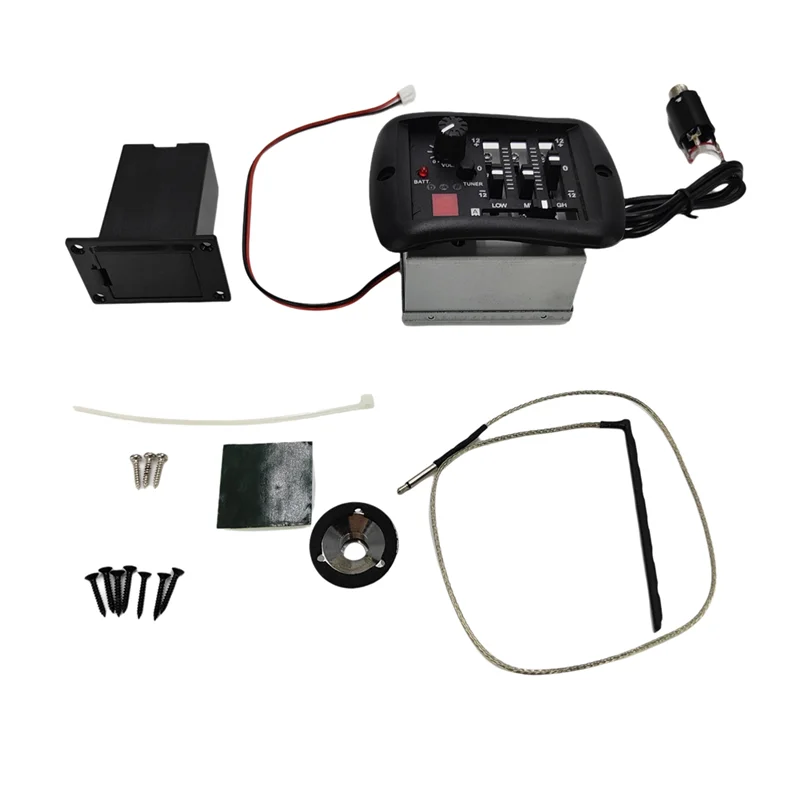
The Gadgetry: Preamp, EQ, Tuner… Oh My! (And the inevitable disappointment)
Ah, the real heart of this beast: the electronic wizardry. Let's dive in, shall we?
The Preamp: "Boosting" Hopes… and Probably Frequencies
An onboard preamp is supposed to make everything better, right? More volume, more clarity, more… well, more of whatever you want to come out of your amp. This one… I plugged it in, cranked it up, and… hmm. It works. Sort of. It does make the guitar louder. But the clarity? Not so much. The tone? A bit… flat. Like someone took the "soul" out of the sound. I fiddled with the knobs. More on that later.
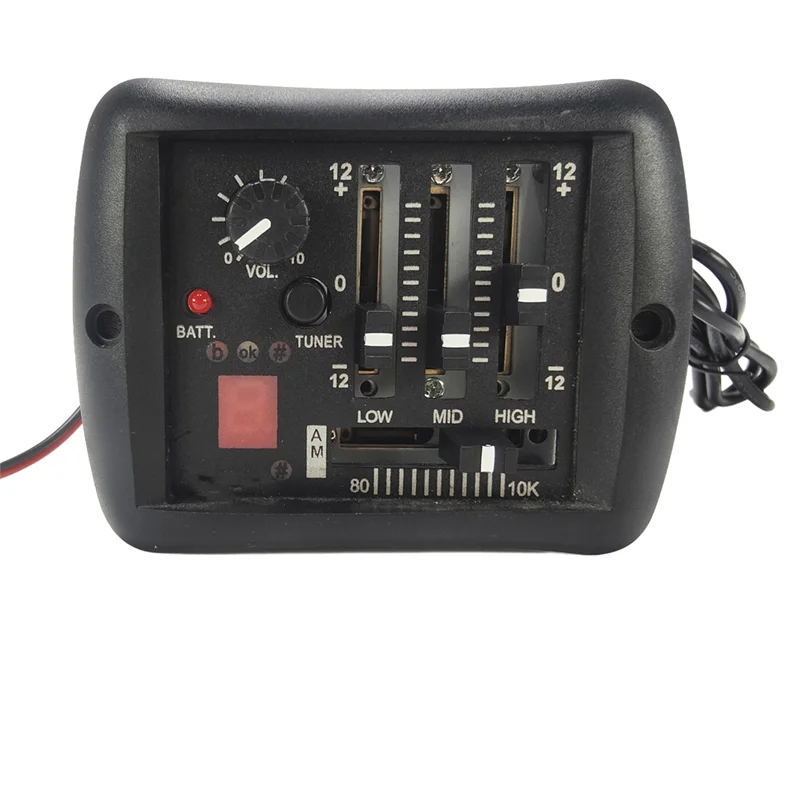
The 4-Band EQ: Sculpting Sound or Just… Shuffling Deck Chairs?
Okay, four bands of EQ. I should be able to shape the sound, right? Boost the bass, tame the treble, find that sweet spot. In theory, yes. Practically, I spent a good hour just twiddling knobs, muttering curses, and feeling more like a DJ at a bad wedding than a guitar virtuoso. It did change the sound. But less in a "refining" way and more in a "slightly different flavor of… meh" kind of way.
The Tuner: A Lifesaver… When It Works
Built-in tuners are fantastic. Absolutely fantastic. Unless they’re glitchy. This one… well, it's a bit hit-or-miss. Sometimes it locks on instantly, like a digital dream. Other times… it’s a frantic dance of flashing lights and the nagging feeling that your E string is actually a confused B-flat trying to find its way home. This gave me a mini-existential crisis at a crucial moment.
The Piezo Pickup: The Bane of My Existence (Okay, Maybe That's Overdoing It… Slightly)
Ah, the piezo. Every acoustic guitarist's… well, let's just say "frenemy."
The Promise of Amplification: The Dream
The dream, of course, is that you plug this thing into an amp, and BOOM! Instant stage-ready sound. Clear, crisp, and ready to blow minds.
The Reality: The Ice Pick in the Ear
The reality? Let's be honest. Piezo pickups are often… well, they're sometimes a bit… thin. They can sound like a tiny, sad mosquito trapped in a tin can. This one? Yeah, it wasn't immune. Harsh high frequencies. A lack of warmth. And a general "piezo-ness" that makes you want to reach for the tone knob and bury it in the mud. I had to spend hours tweaking the EQ on my amp, just to get it sounding… tolerable.
The Unpleasant Buzz: Another Story
Deep breath. And then there's the buzz. Oh, the horrible, relentless buzz. It's subtle – at first. Then it slowly creeps into your consciousness, until you're convinced your amp is secretly a hive of angry bees. I even did the whole thing with the cable, replacing it, changing the guitar's angle… I could not find the source of the buzz.
Playing It: The Moment of Truth (Or More Likely, Mild Disappointment)
Finally, I actually played the thing.
The Neck: Manageable, But…
The neck felt… okay. Not amazing. Not terrible. A bit… generic. The action (the distance between the strings and the fretboard) was a little high, which made it more difficult to play than my usual acoustic. I could work with it, but it definitely wasn’t the sleek, effortless gliding experience of a well-set-up instrument. It was playable. But just barely.
The Sound (Acoustically): A Little… Muffled?
Unplugged, the sound was… soft. Not a booming cannon of sound like I'd hoped for. More… reserved. Pleasant, but not particularly inspiring. A perfect guitar for whispering secrets to a pillow.
The Tuning Pegs: Holding Tune… Sometimes
The tuning pegs… well, it actually stayed in tune for decent amounts of time. I am not a huge fan of the hardware. I don't find them to be too elegant. This is something I would eventually change.
Final Verdict: The "Professional Sound" Lie and a Pinch of Hope
So, did this guitar deliver on its "Professional Sound Guaranteed!" boast? Absolutely not. Nope. Nuh-uh.
The Price vs. Performance: A Balancing Act
Look, it's a budget guitar. I knew it wasn't going to be a Martin. My expectations were calibrated accordingly. But even for the price, the quality felt… lacking.
The "Professional" Myth: Shattered Like a String
"Professional Sound"? That’s a bit like promising world peace. It's a nice dream, but the reality is a bit… different. You can get a decent sound out of this guitar, with a lot of tweaking and maybe some external effects. But it's not going to magically transform you into a guitar god. You'll be ok, but you will be working it.
The Silver Lining: A Starting Point?
The good news? It's a playable instrument. And it can be a stepping stone. You can learn on it. You can hone your skills on it. You can maybe, just maybe, get it sounding okay with some serious effort. It's the guitar equivalent of a fixer-upper.
The Takeaway: Manage Your Expectations
So, if you're looking for a cheap guitar, be aware. Don’t believe the hype. Manage your expectations. But if you are just starting out, this could be an okay buy. I wouldn't expect too much. Maybe the next guitar will be better. I hope for it.
FAQ sur ma Guitare Folk avec Préampli EQ 4 Bandes, Accordeur & Pick-up Piezo - Son Professionnel... ou presque!
Alors, cette "son professionel garanti", c'est quoi le délire ? C'est vraiment le top, ou c'est du pipeau pour pigeon ?
Ah, la question à un million (de dollars, parce que le prix de la guitare, lui, est plus... abordable). Écoutez, "son professionnel garanti", c'est un peu comme dire que votre café matinal est "l'expérience ultime du barista". Ça flatte l'égo, on adore ! Disons que l'objectif est là. Le pick-up piezo, l'EQ 4 bandes, l'accordeur intégré... c'est un peu comme avoir un petit studio d'enregistrement dans le dos. Vous pouvez jouer avec le son, l'adapter. En gros, ça vous donne un son bien plus puissant et contrôlable que juste une guitare folk nue.
L'Anecdote : J'ai essayé de jouer en public une fois. J'avais vraiment bossé le réglage de la guitare, je me sentais prêt. Montée sur scène, premier accord... et *boum* ! Un feedback infernal ! Le micro de la guitare hurlait comme une sirène de police. J'ai passé cinq minutes à tâtonner avec l'EQ pour calmer le jeu, tandis que le public me regardait avec une expression entre l'ennui et l'horreur. Finalement, ça s'est arrangé, mais j'ai appris que "professionnel" c'est aussi une question d'expérience... et de ne pas oublier son câble ! C'est pas du pipeau, mais faut bosser le truc. Faut maîtriser les réglages, sinon... c'est le chaos.
L'accordeur intégré... c'est fiable, au moins ? J'ai déjà vécu des moments de galère avec un accordeur capricieux...
Oh oui, MON DIEU, l'accordeur ! Celui-là, c'est une bénédiction et une malédiction. Généralement, il est correct. Suffisamment précis pour vous éviter de pleurer à chaque fausse note. Pratique pour s'accorder discrètement pendant un concert (quand il n'y a pas de feedback, bien sûr, on a appris ça avant, hein!).
Mais... il a ses jours. Les jours où il décide de ne pas "voir" la note, ou de vous dire que votre mi grave est un sol aigu. Ça arrive. Ça fout les nerfs. Surtout quand vous êtes sur scène, devant un public, et que vous devez vous accorder en urgence.
Anecdote numéro 2 : Un soir, j'ai joué en extérieur, il faisait froid, humide... le genre d'environnement où l'électronique fait ce qu'elle veut. L'accordeur était complètement à côté de la plaque. Chaque corde était une loterie. J'ai fini par accorder à l'oreille, comme un vieux pro (rires nerveux). Le pire ? On m'a dit après que c'était "charmant". Charmant, oui, comme une mauvaise blague qui dure toute une chanson.
En bref : Fiable, oui, mais toujours avoir un accordeur de secours dans sa poche. On ne sait jamais. Soyez toujours sur vos garde. Et priez pour que la météo soit clémente.
Le préampli EQ 4 bandes, c'est quoi que ça fait exactement ? C'est compliqué à utiliser ?
L'EQ 4 bandes, c'est votre baguette magique (ou plutôt, vos curseurs magiques). Ça vous permet de sculpter le son. Vous pouvez renforcer les basses pour un son plus rond, les aigus pour un son plus brillant, ou jouer sur les médiums pour donner plus de corps à vos solos. C'est le "plus" de la guitare.
La réponse courte : Oui, c'est un peu compliqué au début. Il faut tâtonner, écouter, comprendre ce que chaque bande fait. Mais une fois que vous avez pigé, c'est génial.
La réponse un peu plus longue : Imaginez : vous jouez dans une petite salle, le son est un peu boueux. Vous montez les aigus, vous baissez les basses... et hop ! Le son devient clair et précis. Ou alors, vous voulez un son plus "chaleureux" pour une ballade ? Vous boostez les basses, et v'la le résultat. C'est un outil puissant, mais il faut le maîtriser.
L'Expérience qui Fait Rire et Pleurer : Au début, j'ai passé des heures à tripoter ces curseurs, à me demander si le son était mieux ou pire. J'ai fini par faire des réglages tellement extrêmes qu'on aurait dit que j'étais branché sur le micro d'une station martienne. Et bien sûr, j'ai tout foiré au premier concert. C'est un peu comme apprendre à cuisiner : faut brûler quelques plats avant de maîtriser le chef-d'œuvre.
Le pick-up piezo ? Ça sonne comment ? On peut l'utiliser pour amplifier la guitare, c'est ça ?
Oui, le pick-up piezo, c'est le truc magique qui transforme les vibrations des cordes en signal électrique. C'est ce qui vous permet d'amplifier la guitare. Le son... est un peu particulier. Pas le plus "naturel" du monde, soyons honnêtes. C'est plus... "électrique". Ça dépend des goûts. Certains adorent, d'autres détestent.
La Vérité : Au début, j'étais un peu déçu. Je m'attendais à un son digne du Grand Canyon. Mais avec l'EQ et un peu de bidouillage, on arrive à quelque chose de correct. C'est surtout super pratique pour jouer en groupe ou sur scène. Si vous voulez jouer fort, c'est indispensable.
Le moment stream-of-consciousness : "Correct"... c'est le mot. C'est pas le son de la guitare acoustique de vos rêves, mais ça fait le job. Faut pas s'attendre à Nirvana. Ça se rapproche plus de "la guitare qui fait du bruit en même temps que les autres, sans vraiment savoir pourquoi". Mais bon, parfois, c'est suffisant.
Et la "garantie" ? Le son dépend énormément de la qualité du pick-up, et surtout des réglages de l'EQ. C'est un peu comme un gâteau : avec les bons ingrédients et le bon coup de main, c'est délicieux. Sinon... c'est la catastrophe.
C'est une bonne guitare pour les débutants ?
Euh... oui et non. C'est comme demander si un couteau suisse est idéal pour apprendre à cuisiner. Il a plein d'outils, c'est pratique, mais il faut savoir s'en servir.
Les plus : L'accordeur intégré, c'est top pour un débutant, ça