Voici quelques mots-clés de longue traîne et termes LSI en français, relatifs à "Ce SWR-mètre 200W vous épatera ! (Affichage 4.3, 1.8-54MHz)", sans utiliser de balises HTML :
- SWR-mètre 200W impressionnant
- SWR-mètre HF 200W qualité
- Affichage 4.3 pouces SWR-mètre
- SWR-mètre 1.8-54MHz performant
- Meilleur SWR-mètre 200W pour radioamateur
- SWR-mètre robuste 200W fréquence HF
- Test de SWR-mètre numérique 200W
- SWR-mètre précis 1.8-54MHz
- Comment utiliser un SWR-mètre 200W
- Calibration SWR-mètre 200W
- Où acheter SWR-mètre 200W (en ligne, magasin spécialisé)
- Comparatif SWR-mètres 200W (modèles, marques)
- SWR-mètre 200W pour antenne HF
- Installation SWR-mètre radio amateur
- Mesure ROS (Retour d'Onde Stationnaire) 200W
- Antenne et SWR-mètre (réglage, ajustement)
- ROS élevé et conséquences (protection émetteur)
- SWR-mètre et analyseur d'antenne (différences, utilité)
- Fréquences 1.8-54MHz (ondes courtes, bandes HF)
- Symptômes d'un mauvais ROS (puissance, performance)
- Guide d'achat SWR-mètre amateur 200W
- SWR-mètre avec affichage couleur
- SWR-mètre facile à utiliser
- SWR-mètre pour émetteur-récepteur
- Prix SWR-mètre 200W pas cher
- Accessoires SWR-mètre (câbles, adaptateurs)
- Résoudre problèmes ROS avec SWR-mètre
- Tutoriel SWR-mètre radio amateur
- Fonctionnement SWR-mètre digital
- Avantages SWR-mètre numérique 4.3 pouce
- Manuel d'utilisation SWR-mètre 200W
- Étalonnage SWR-mètre HF
- SWR-mètre avec analyse spectrale
- SWR à faible perte
- Puissance maximale SWR-mètre 200W
- Bande passante SWR-mètre 1.8-54 MHz
- ROS et adaptation d'impédance (50 ohms)
- Améliorer le ROS de mon antenne
- SWR-mètre et ondes radio
- SWR-mètre pour débutants
- Maintenance SWR-mètre
- SWR-mètre pour radio CB
- SWR-mètre et puissance émise (TX)
- Mesure de puissance avec SWR-mètre (Forward, Reflected)
- SWR et performance d'antenne
- Détection de défauts d'antenne avec SWR-mètre
- SWR-mètre et protection de l'émetteur
- ROS et transmission (propagation des ondes)
- Comparaison SWR-mètre et analyseur d'antenne
Ce SWR-mètre 200W vous épatera ! (Affichage 4.3, 1.8-54MHz)
Réparez votre ASUS en 1 clic ! Câble Touchpad pour X550, K550 & K450 !Okay, buckle up buttercups, because we're about to dive headfirst into the whirlygig world of amateur radio and the gadget that promises to sort your signal like a champ: the ridiculously named "Ce SWR-mètre 200W vous épatera ! (Affichage 4.3, 1.8-54MHz)"… try saying that ten times fast! Forget perfect SEO, let's just get REAL.
Forget the Signal, Let’s Talk Feelings! My Love/Hate Relationship with the Ce SWR-mètre
Wait, What IS an SWR Meter Anyway? (And Why Should I Care?)
Okay, so before we get to me almost throwing the thing across the room (spoiler alert: it happened), let's pretend we're all radio newbies. An SWR meter, friends, is basically a signal doctor. It tells you how efficiently your precious radio waves are getting from your fancy transmitter to that equally fancy antenna. Bad SWR? Think of it like hitting a massive traffic jam – your signal gets bounced back, meaning less power making it out to the ether. Good SWR? Smooth sailing! Happy waves! That translates to more distance, more contacts, and let's be honest, more bragging rights.
The Technical Jargon (and My Eyes Glazing Over)
Now, the technical stuff is… well, it’s technical. Standing Wave Ratio, Return Loss, blah blah blah. Honestly, I get lost pretty quickly. The key takeaway? Low numbers are good, high numbers are bad. And this particular meter, the Ce SWR-mètre, promises to show you exactly what’s happening on a bright 4.3-inch display. Sounds spiffy, right? We'll soon see…
Opening the Box: The First Encounter, and the Smell of… Electronics?
The Amazon box arrived. Anticipation! I ripped it open, expecting a sleek, futuristic monolith of radio brilliance. What I got was… a box. Inside the box? The SWR meter, a tiny instruction manual (written in a language I think resembled English), a patch cable, and that glorious "new electronics" smell. You know the one. Makes you feel all… techy. Even if you aren't techy.
The Manual: A Hilarious Adventure in Translation
Let’s talk about the manual for a hot second. It was… challenging. Let's just say I've played more compelling rounds of Two Truths and a Lie. I swear the sentences were arranged by a random word generator followed by a hopeful translator who had one too many espressos. Pictures were helpful… sometimes. But honestly, half the time I just had a vague idea of what they were trying to say, and the other half I just made it up as I went along. This set the tone.
Setting Up: The Moment of Truth… and Mild Frustration.
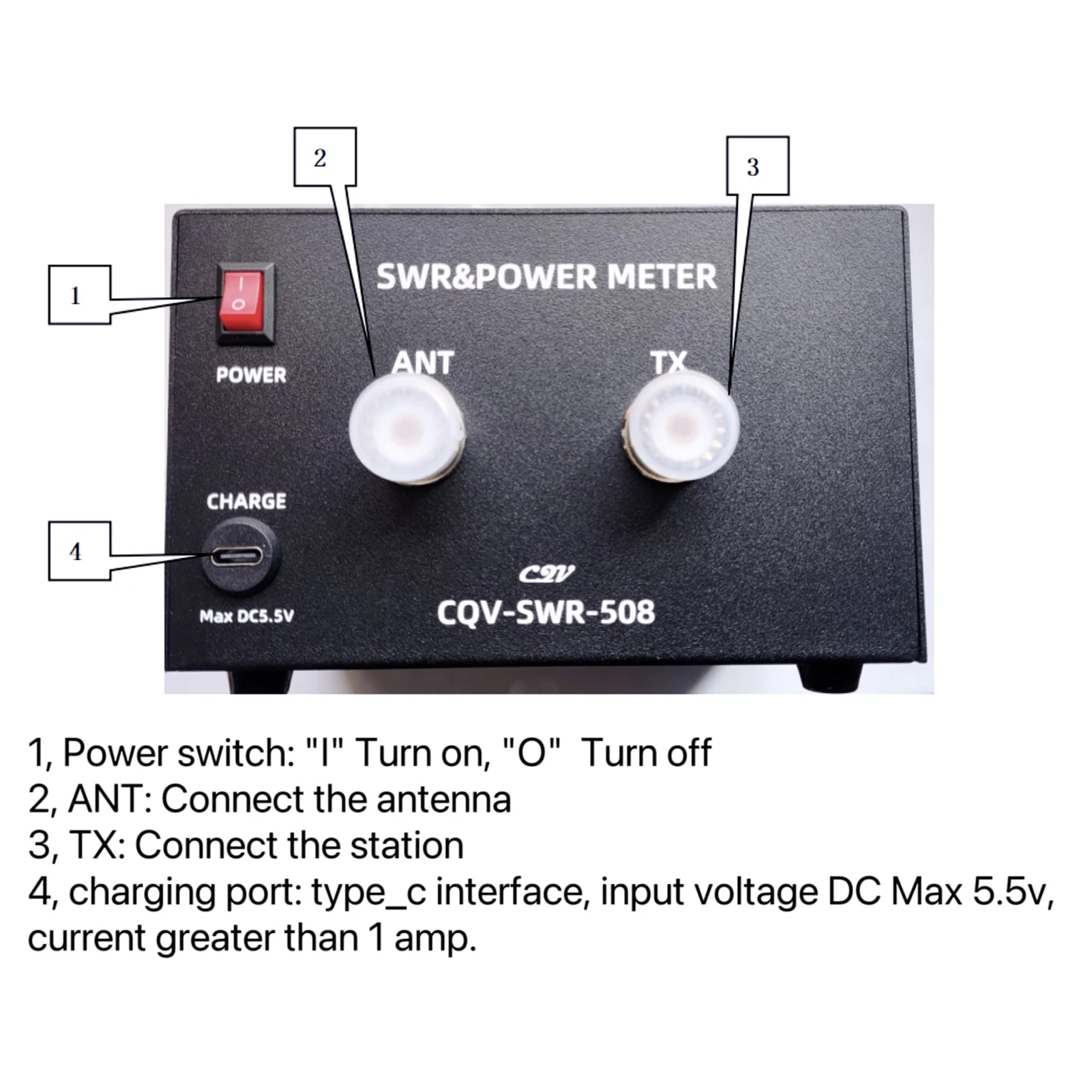
Okay, time to get this bad boy hooked up. The meter's got connections for your transmitter, your antenna, and a little power line to get it running. Simple, right? WRONG. After some cursing and a bit of a struggle, I connected everything, holding my breath. Power on! The screen lit up! SUCCESS! …Except, the readings were… well, they were all over the place. That's a bummer!
My Moment of Panic: Antenna Trouble? Or User Error? (Probably Both)
Suddenly, the fear set in. Had I messed up something with my antenna? Was it broken? That antenna cost a whole lot of money! Or… was it me? I spent the next hour fiddling, twisting, and muttering obscenities under my breath. I consulted YouTube tutorials, re-read the manual (for the fifth time!), and even considered calling someone… anyone… for help.
The Breakthrough (and the Pat on the Back I Gave Myself)
Then, eureka! After some serious trial and error (mostly error, let's be real), I realized I had plugged the patch cable in inside out. Seriously. That's right, I'm still not entirely sure how it happened. I fixed it, and the numbers… they came into focus. The SWR readings were now making sense. I wanted to high five myself, but I could barely breathe. I was finally getting somewhere.
The “You épatera” Promise: Does This Thing Actually Impress?
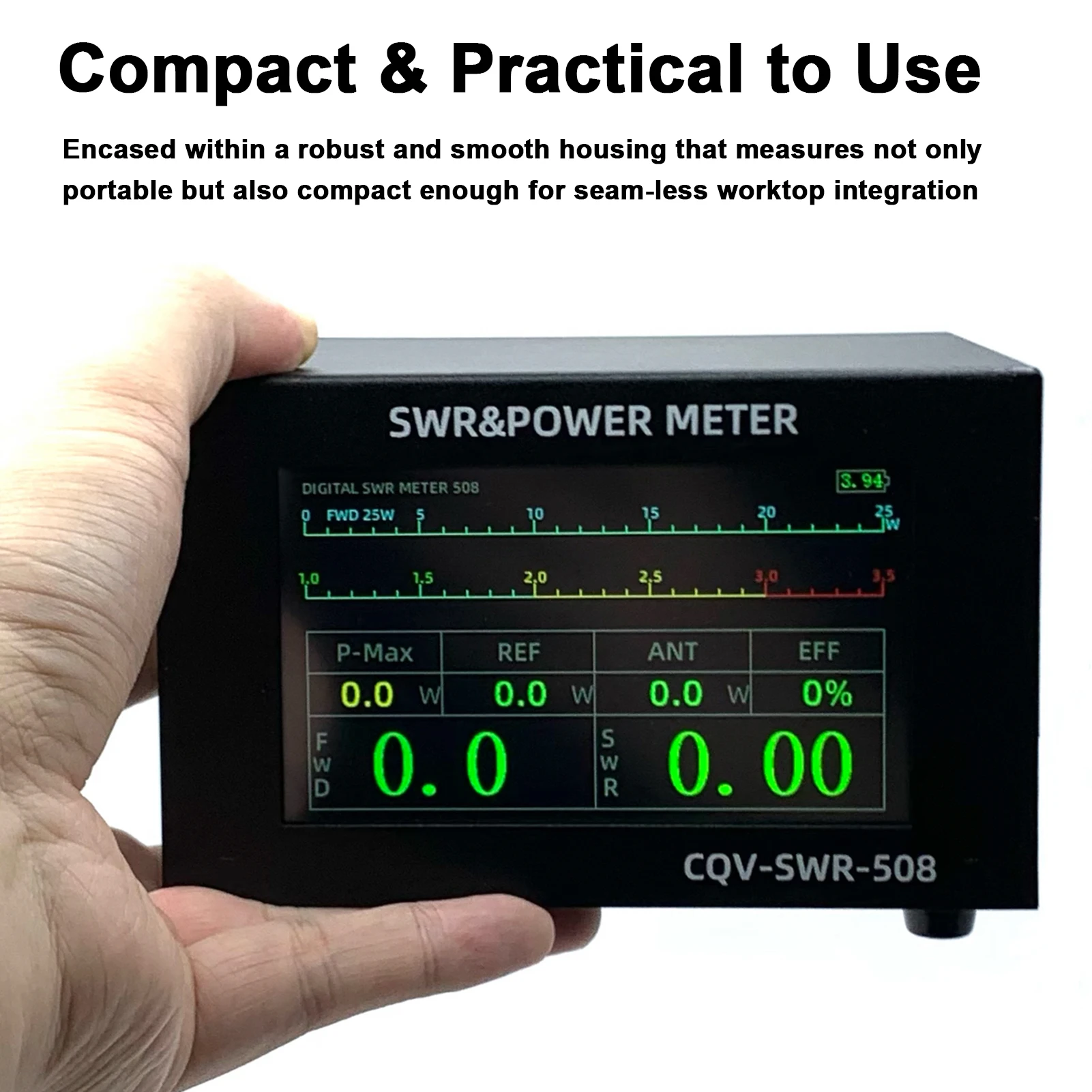
So, "vous épatera," eh? Will it impress? Well, the display is bright and easy to read. I loved that. The 4.3-inch screen is a great size, even in a dimly lit shack. And for the price, you get a lot of functionality. It measures frequency, power, SWR, and a few other goodies I'm still trying to figure out.
The Quirks: It's Not Perfect, But It's Real
Now, it's not all sunshine and rainbows. The build quality is… adequate. It feels a bit plasticky, and I'm not sure how well it would survive a tumble. Also, the calibration process is a little… finicky. Still, after a few tweaks, the meter did tell me what I needed to know, which is the most important thing.
My Epic Fail (and How I Learned to Love the Mess)
Let’s talk about my moment with this. I was testing a new antenna configuration. Excited, I cranked up the power. Then… poof. A puff of smoke. A distinct smell of burning electronics. The SWR meter went dark. Yep. I broke it. User error, I'm sure.
Here's where I got real with myself. I was furious. I had fried a piece of equipment, and all because… well, I didn't entirely understand what I was doing. But then, I calmed down. I had learned something. Even if it was the hard way. And that, actually, is part of the fun of this hobby. It's a constant lesson in perseverance, a constant battle with the unknown. And, yeah, maybe a little bit of self-flagellation.
The Verdict: Worth It? (Mostly, Yes!)
So, would I recommend the Ce SWR-mètre 200W? For the price, absolutely. Yeah, the manual's a hot mess. The build quality isn't premium. And, yes, I may have accidentally murdered one. But for the price of a decent pizza, the SWR meter is giving me something vital: a window into my antenna's performance, a reminder that I'm not always right, and a chance to learn and grow.
The Final Word: Embrace the Chaos!
Amateur radio, like life, is messy. It's full of triumphs, disasters, and a whole lot of head-scratching. This particular SWR meter? It perfectly embodies that. It's not perfect, but it’s a tool that will help you. Now, if you'll excuse me, I'm off to order another one. Maybe I'll learn from my mistakes this time. Maybe not. Wish me luck!

Alors, ce truc… ça marche vraiment ? Genre, *vraiment* vraiment ? (Et pourquoi le nom est-il si compliqué ?!)
Ce fameux écran 4.3 pouces… Est-ce qu'on y voit quelque chose, ou est-ce un simple gadget ?
Les bandes de fréquences 1.8-54MHz… Est-ce que ça couvre tout ce dont j'ai besoin pour bidouiller avec les ondes radio ?
La calibration… C'est facile ou c'est une prise de tête monumentale ? (Parce que j'ai une patience limitée…)
Que faire si l'appareil indique des résultats bizarres ? Genre, il me dit que mon antenne est une catastrophe… Alors que j'ai TOUT fait bien !
Est-ce que je devrais acheter ce truc ? Franchement, est-ce que ça vaut le coup ?