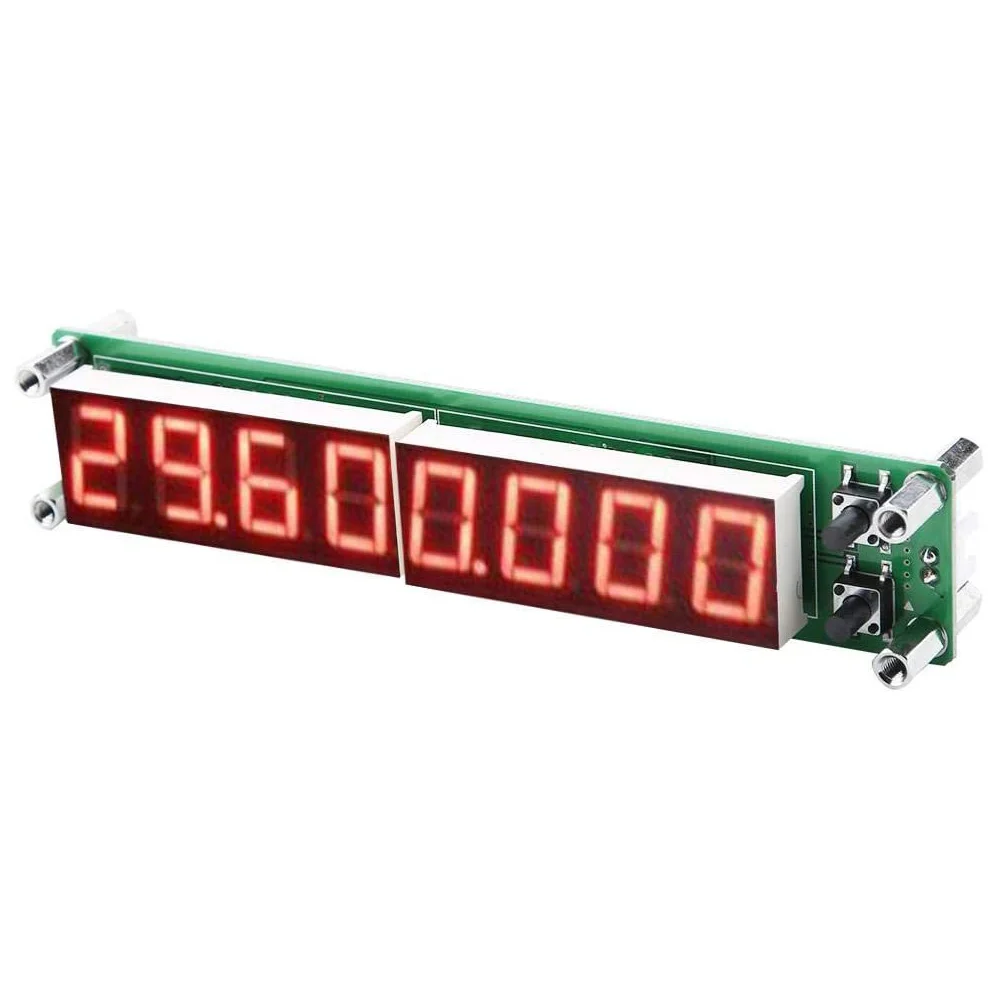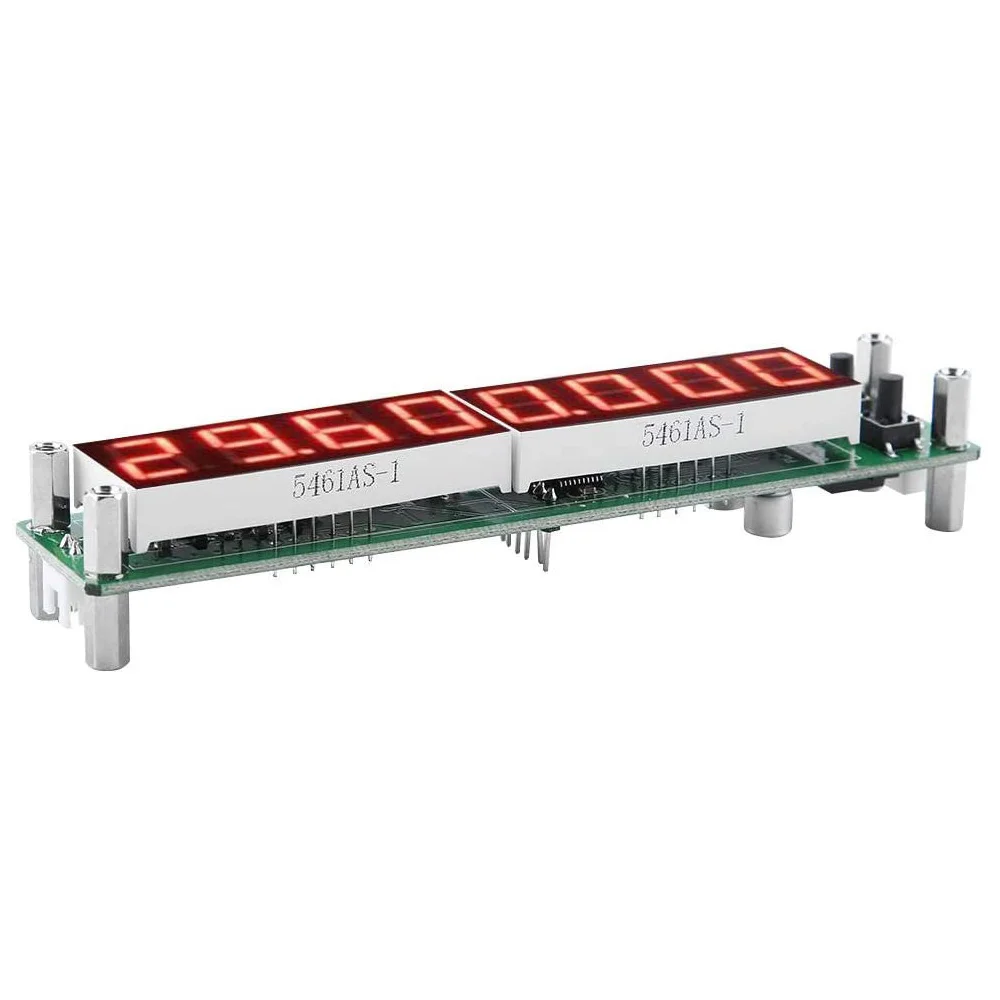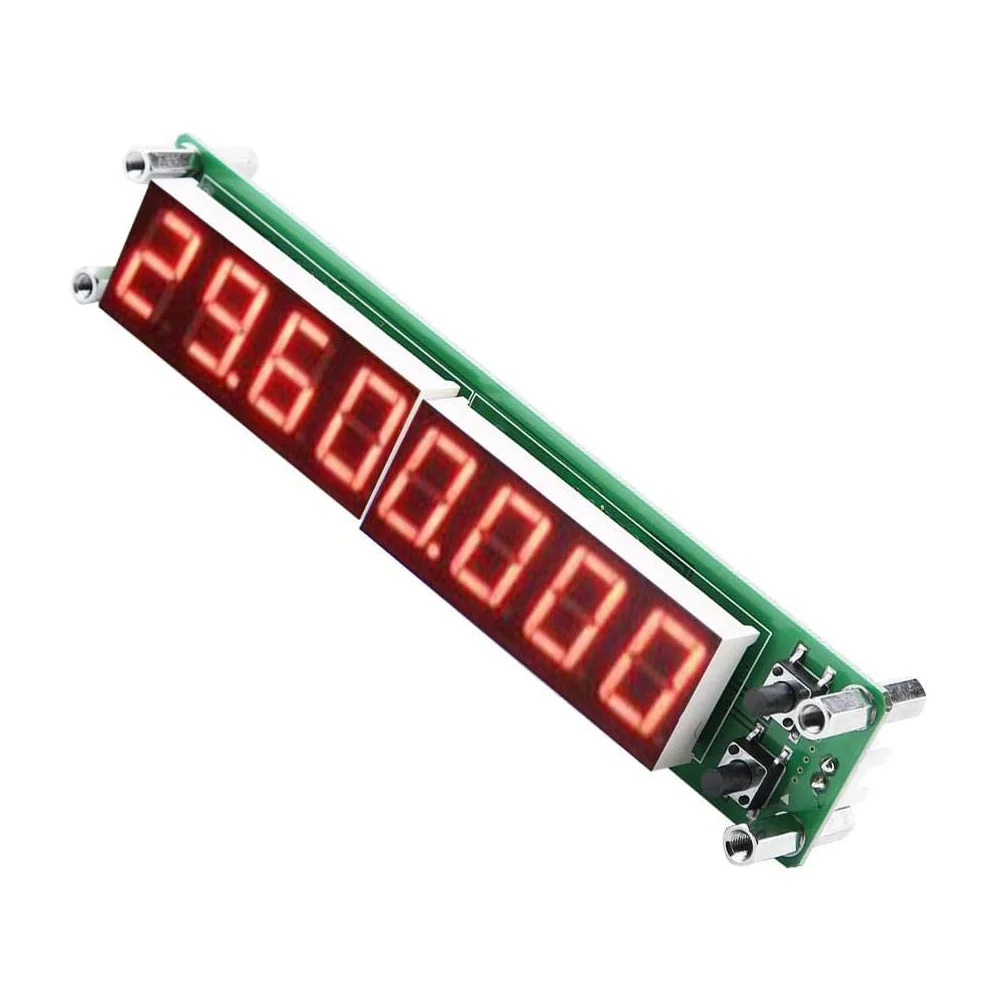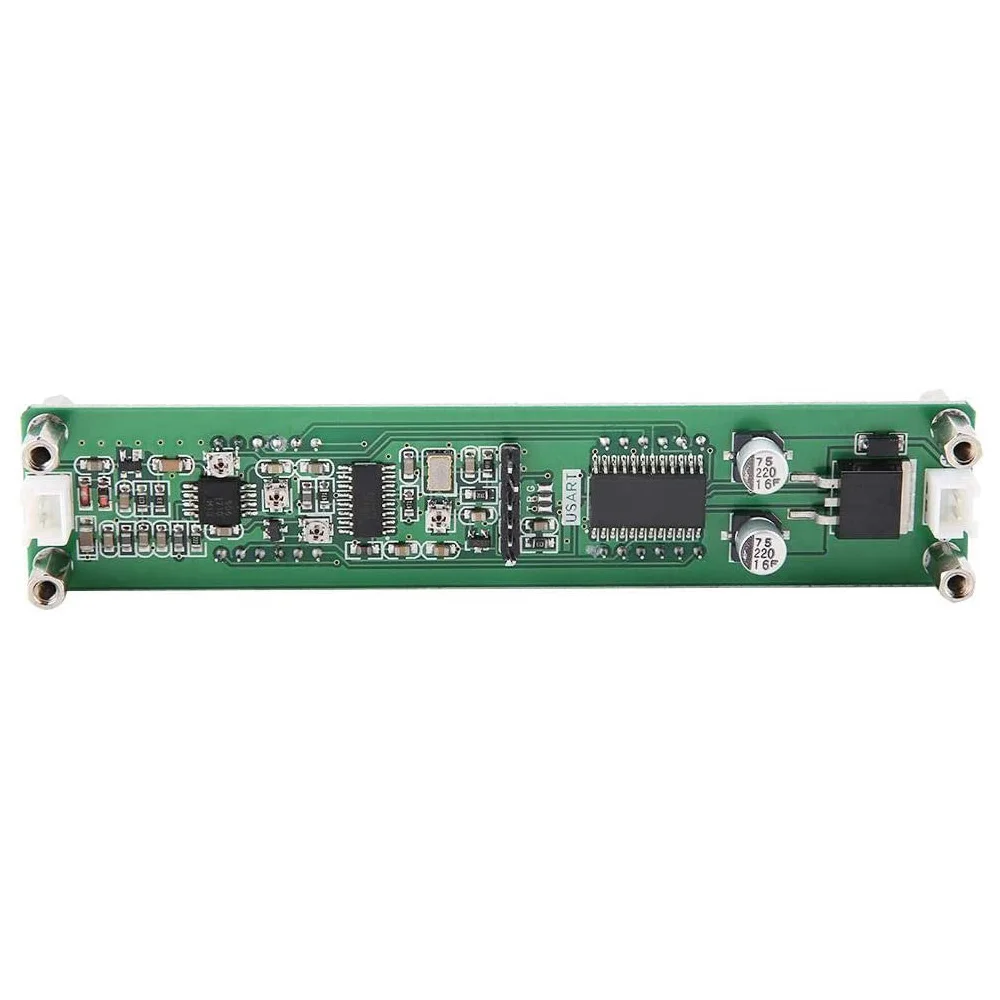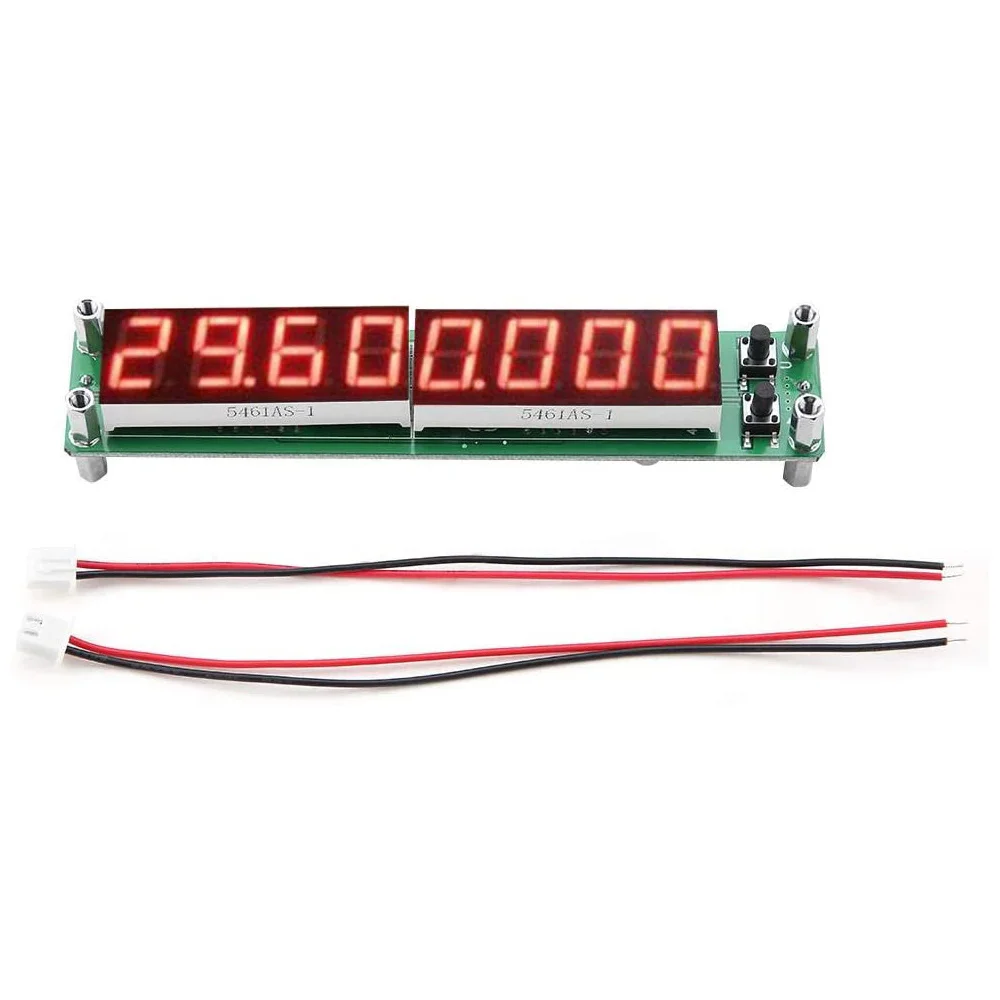
Mesurez la fréquence comme un pro : Cymomètre 0.1-1000MHz !
- Cymomètre professionnel 0.1-1000MHz : analyse spectrale précise
- Comment utiliser un cymomètre pour mesurer la fréquence radio ?
- Cymomètre numérique : lecture facile et calibrage précis
- Bande de fréquences 0.1-1000MHz : applications et utilisations
- Cymomètre HF : mesure des signaux haute fréquence et circuits intégrés
- Cymomètre : troubleshooting d'équipements électroniques et radioamateur
- Choisir le meilleur cymomètre pour vos besoins : critères de sélection
- Cymomètre pas cher : options abordables pour mesurer la fréquence
- Calibration du cymomètre et précision de la mesure
- Cymomètre : guide d'utilisation et tutoriels pour débutants
- Cymomètre : composants électroniques et oscillateurs
- Fréquencemètre 0.1-1000MHz : analyse de la qualité du signal
- Cymomètre : mesure de la fréquence des ondes radio FM et AM
- Cymomètre et antennes : analyse des performances et de la résonance
- Cymomètre pour radio amateur : diagnostic et réglage des émetteurs-récepteurs
- Cymomètre portable 0.1-1000MHz : mesures sur le terrain et en atelier
- Cymomètre : analyse des harmoniques et des signaux complexes
- Cymomètre et CEM (compatibilité électromagnétique) : mesures et tests
- Cymomètre : comparatif des modèles disponibles sur le marché
- Cymomètre : dépannage de radios et équipements audio
- Cymomètre : oscillateur, fréquence, signaux, RF, mesure, analyse, précision, calibration, bande de fréquences, signaux complexes, équipements électroniques.
- Cymomètre : guide d'achat, prix, modèles recommandés, avis utilisateurs
- Cymomètre 0.1-1000MHz : caractéristiques techniques et performances.
- Cymomètre : mesure de la fréquence des circuits électroniques
- Cymomètre et Arduino : intégration et projets DIY
Mesurez la fréquence comme un pro : Cymomètre 0.1-1000MHz !
Transformez Votre Son : Adaptateur Bluetooth 5.4 Incroyable !Ditch the Guesswork! Become a Frequency Ninja with a 0.1-1000MHz Cymometer! (OMG, It Actually Works!)
Alright folks, gather 'round! Ever stared at a radio circuit and felt like you were decoding hieroglyphics? Yeah, me too. Especially when I was trying to fix my ancient, sputtering ham radio. I'm talking about that sinking feeling in your gut when you think you've got the problem, but you’re just poking around blindly. Well, let me tell you, friends, that feeling? Goodbye. Thanks to this little gadget – the 0.1-1000MHz cymometer! - I’m officially a frequency-detecting, troubleshooting wizard (in my own mind, at least).
The Dark Ages of Radio Tinkering (Before the Cymometer!)
Before I get into the good stuff, let me paint a picture of my pre-cymometer life. It was a struggle.
Blind Faith and the Magic Smoke
My main tools were a multimeter, a soldering iron (which I still manage to burn myself with occasionally – embarrassing but true), and a whole lotta hope. You know, the kind of hope that quickly vanishes when you apply power and see the dreaded “magic smoke” escape from your precious electronic creation. That’s when I'd really start questioning my life choices. It was all guesswork! Did I fry the crystal? Is the oscillator even…oscillating? ARGH!
The Humbling Experience of “Close Enough”
Then came the inevitable, “close enough” approach. "Well, probably that's 27 MHz, right? Let's just… tweak it." Hours of frustration, a pile of useless components, and a growing sense of despair. It was like trying to find a needle in a haystack…blindfolded…during a hurricane. My friends, it was a mess.
Enter the Savior: The Cymometer! (Cue the Angels!)
So, I stumbled upon this little beauty. A 0.1-1000MHz cymometer. I initially approached it with skepticism. You know, the "too good to be true" vibe. But hey, it was relatively cheap (seriously, a game-changer for a budget-conscious hobbyist like myself!). Plus, the reviews looked promising. So, I took the plunge.
Unboxing and Initial Doubts (Sound Familiar?)
The box arrived. Tiny. Okay, that was the first sign. It seemed a little… plastic-y. And the instructions? Let’s just say they weren’t exactly Shakespeare. But, with a deep breath and a shot of caffeine, I plugged it in.
The First Test: A Moment of Truth (and a Bit of a Fail)
Remember that sputtering ham radio I mentioned? That was my test subject. I carefully connected the cymometer (which, I must admit, I was still a little nervous about breaking). I poked around, and… nothing. Crickets. My heart sank. Did I get a dud?
Then, I realized I'd completely missed a vital step. I hadn't… turned it on. (Facepalm). Once I did, BAM! Numbers started flashing on the display. A beautiful, glorious sequence of digits, telling me the exact frequency I was measuring. I swear, I almost cried.
Learning to Read the Tea Leaves (of Frequency)
It took a little time to get the hang of things. There were a few hiccups, naturally.
Impedance Woes
Initially, I got readings that made absolutely no sense. Turns out, I had to learn about impedance matching. (Don't ask me to explain it in detail, I’m still learning!). Let's just say it involved some fiddling with settings and a lot of head-scratching.
Probing Around Like a Noob
I also had to learn about proper probing techniques. I kept getting wonky readings because my probe was touching the wrong spots – or even worse, picking up interference from everything else in the room. (My wife’s hairdryer was a culprit – who knew?!) It was like learning to paint with a chainsaw. But, I persevered.
Real-World Applications (Proof I'm Not Crazy!)
After all the struggling, I started to actually use this thing! And it started making a real difference.
Finally Fixing the Ham Radio (Yes, REALLY!)
Back to that sputtering ham radio. That was my main motivation but after that, I was already improving things. Identifying the faulty crystal was a breeze. I could pinpoint the exact frequency of the oscillator, and I knew instantly if something was off. Troubleshooting became fun. I actually felt like I was in control of the situation.
Beyond Radio: More Than Just Signals
I started using it to test other things too:
Identifying Mystery Signals
I could check the frequency of my WiFi router (just out of curiosity, of course… definitely not to optimize performance, ahem), test the output of RF signal generators, and even diagnose problems with my remote-control car. It was like having a superpower!
The "Ooh, Shiny!" Effect
I admit it. I get a real kick out of watching the numbers on the display dance around. It’s like a tiny, digital rave. It's a little bit addicting.
The Verdict: Buy This Thing Right Now!
Look, I won't lie. This cymometer isn't perfect. The case feels cheap, the instructions are a little lacking, and it requires a degree of patience. But honestly? The benefits SIGNIFICANTLY outweigh the shortcomings.
Why It's Worth Every Penny (and Then Some!)
This cymometer is a game-changer. It's demystified frequency measurement for me, made troubleshooting so much easier, and turned a frustrating hobby into an enjoyable one.
Final Thoughts (and a Plea for More Understanding)
If you're even remotely interested in radio, electronics, or just tinkering with stuff, you need this. Seriously, it’s an amazing tool. Don’t let the slightly dodgy appearance or the vague instructions put you off. Take a deep breath, dive in, and prepare to have your mind blown.
Now if you will excuse me, I gotta go see what my neighbor's microwave is up to… (Just kidding… mostly.) Now happy tinkering -- go get yourself a cymometer and make some magic!
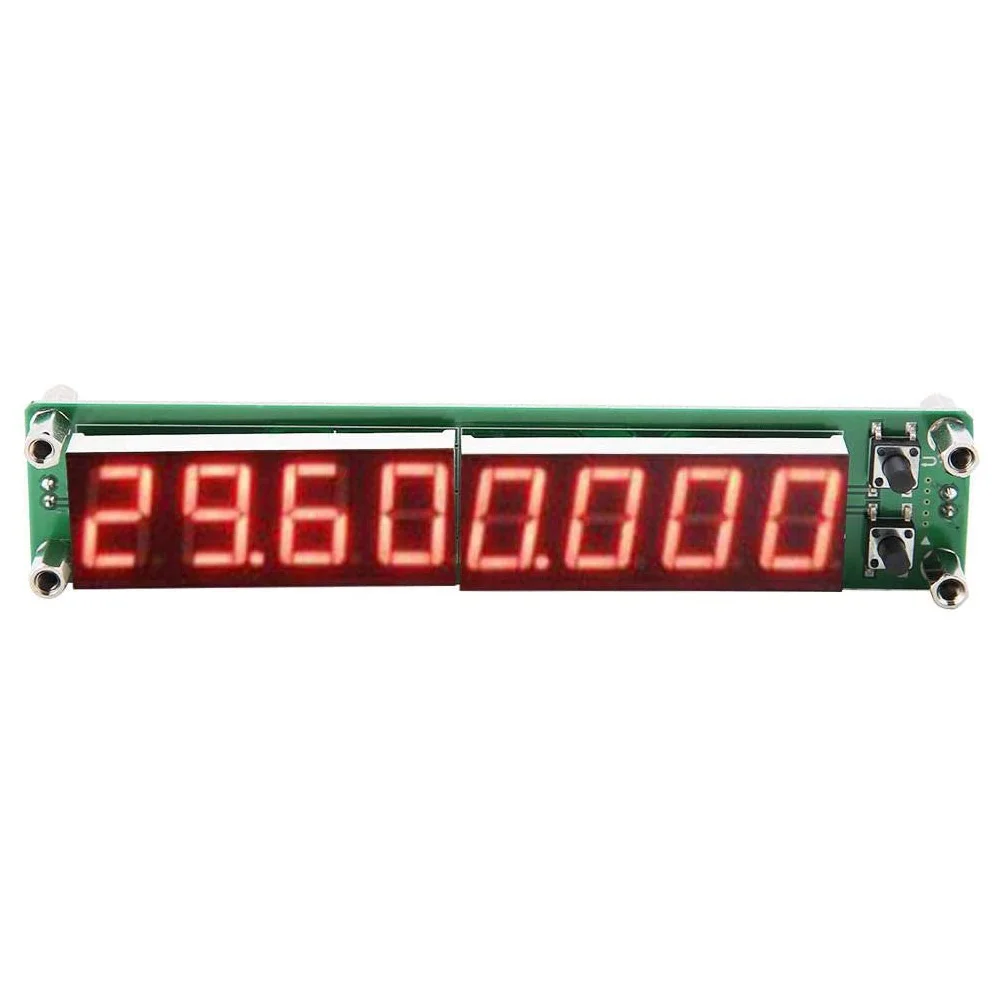
FAQ : Mesurez la fréquence comme un pro avec le Cymomètre 0.1-1000MHz ! (Mais, genre, vraiment?)
Okay, so you've got this shiny new frequency counter, the Cymomètre 0.1-1000MHz. That's the theory, right? Let's be honest, it's probably a little more "try and get it to vaguely work, pray to the RF gods, and then tweak it until something kind of resembles a frequency" in practice. But hey, we'll try. Here's the "wisdom" (and I put that in quotes VERY deliberately) gleaned from my own adventures with this little wonder.
Q: Qu'est-ce qu'il fait, exactement ce machin ? (Seriously, what does it DO?)
A: Well, in its most basic form, it counts how many times a signal oscillates per second. Like, imagine little dudes running back and forth, and the Cymomètre is the grumpy accountant yelling "ONE, TWO, THREE... HOLD IT, WHAT WAS THAT?! BACK TO ONE!" (Okay, maybe I need more coffee). Basically, it tells you the frequency of a radio signal. Pretty useful stuff if you, you know, *need* that information. For me? Sometimes for fun, sometimes to troubleshoot stuff, sometimes to prove I'M NOT CRAZY when that weird radio station suddenly pops up in my garage. (Okay, maybe I *am* a little crazy.)
Q: Est-ce que c'est facile à utiliser ? (Easy mode, or...?)
A: Easy... depends on your definition. "Easy" like, "making toast, as long as you don't mind the smoke alarm going off"? Or "Easy like, learning to play the accordion blindfolded after a sugar rush"? It's kinda in between. The interface is usually straightforward (numbers, buttons, maybe a tiny screen that wants to give you a headache). But the "getting a *reliable* reading" part? That's where the fun (read: frustration) begins. I mean, sometimes it works perfectly. Other times... you wonder if it's just picking up stray thoughts from the microwave. I swear, I once got a reading that perfectly matched my neighbor's dog's barking.
My Anecdote of Doom: Let me tell you about the time I tried to measure the frequency of my Wi-Fi router. Sounds simple, right? HA! First, I spent an hour trying to figure out *where* to plug the antenna. The instructions? A single sentence in broken English that promised a "good frequency reading". Good frequency reading for what? For ants? For the ghost of Nikola Tesla? Finally, connected it. The readings? Garbage. Complete and utter garbage. Numbers that flickered faster than a politician's promises. I swore, I yelled, I threatened to throw the whole damn thing out the window. Then, *after* I unplugged a cheap USB charger next to it... magically, the frequencies started to make sense. Lesson learned? RF is a moody, capricious mistress.
Q: Qu'est-ce que je peux mesurer avec ça ? (What can I actually measure?)
A: Ah, the million-dollar question (even if this thing cost, like, $50). Pretty much anything within its frequency range (0.1 to 1000 MHz). Think: radio transmitters, amateur radio signals, walkie-talkies, Wi-Fi (as I learned the hard way), maybe even your car key fob. Theoretically. In *practice*? Be prepared to fiddle. And, again, protect yourself from the RF gremlins. They *will* mess with you.
Don't forget: The better the antenna, the better the results. The included antenna? Let's just say it's probably made of pixie dust and wishes. You will probably want to buy a better one. It will save you a *lot* of grey hairs. And screaming.
Q: Y a-t-il des trucs bizarres à savoir ? (Any weird quirks I should be aware of?)
A: Oh, honey, buckle up. Firstly, *location, location, location!* RF is a fickle beast. Things like power supplies, computers, other electronics can *seriously* mess with your readings. Keep it away from literally everything, *especially* if you want accuracy. Seriously. Also: The screen? Often, it can be hard to read from certain angles, or if it's in direct sunlight. It's like the engineers were actively *trying* to make it annoying.
Secondly, the input sensitivity. Too low, and you get nothing. Too high, and you get... well, a mess of readings you have to filter through. Experiment. Be patient (I know, easier said than done).
Finally.. expect the unexpected. Things that seem "normal" can throw off readings. I spent a week tearing my hair out trying to figure out why a particular frequency kept fluctuating wildly. Turned out? It was my neighbor's ancient, dying fluorescent light. I kid you not. RF is the ultimate troll.
Q: C'est quand même utile, non ? (Is it still worth it, though?)
A: Hmm. Yes. Mostly. Look, if you need highly accurate, super-precise frequency measurements for, say, rocket science, maybe invest in a professional-grade counter. But for hobbyists, tinkerers, and the slightly obsessive (like me)? It's a fun tool. It’s also great for learning and understanding the radio spectrum. Plus, there is a certain *thrill* when you *finally* get a clean reading after battling the RF demons. Think of it as a quirky, unreliable, occasionally infuriating but ultimately rewarding adventure. Just… don't expect miracles. Or perfect readings. Or sanity. Probably a good idea not to expect sanity.
Q: Conseils de pro ? (Pro-Tips?)
A: Okay, take it from someone who's almost thrown this thing out the window multiple times:
- Patience, mon ami, patience. RF can be a slow burn. Don't trust the first reading. Give it a few seconds.
- Experiment with antennas: Seriously. The one it comes with is trash. Spend the money.
- Shielding is your friend: Especially in noisy environments. A metal enclosure can save you from a lot of headaches.
- Read the manual.... I'm joking! Nobody reads them! (But, you know, *maybe* give it a skim...)
- Most importantly: Don't be discouraged if it doesn't work perfectly. It's part of the fun. And hey, at least you'll have a good story to tell. (Like my dog barking story, which, yes, is still a bit of a mystery).